
Couples Therapy Alternatives: What to Try Before (or Instead of) Therapy
Not ready for couples therapy? Discover the most effective alternatives that help with real relationship problems, starting today.

Couples Therapy Alternatives: What to Try Before (or Instead of) Therapy
Couples therapy is valuable. But it's not the only path — and for many couples, it's not the right first step.
Maybe the cost is a barrier. Maybe your partner isn't ready. Maybe the problems aren't severe enough to warrant weekly sessions, but real enough to ignore. Whatever the reason, you're looking for ways to help your relationship problems without sitting in a therapist's office.
Good news: there's a lot that works.
This guide covers the most effective couples therapy alternatives — honest about what each one is good for, and when therapy itself becomes the right call.
Why Couples Therapy Isn't Always the Answer
Let's be clear: couples therapy works. According to the American Psychological Association, approximately 75% of couples who attend therapy report improved relationship satisfaction. Research consistently shows it helps the majority of couples who engage with it genuinely.
But it comes with real barriers:
- Cost: In most countries, sessions run €80–€180 per hour ($100–$250 in the US), rarely covered by insurance
- Availability: Waiting lists of 3–6 months are common in many regions
- Timing: Dr. John Gottman's research found that couples wait an average of 6 years after problems begin before seeking help — by which point patterns are deeply entrenched
- Buy-in: Both partners need to be willing — one reluctant partner makes progress difficult
- Stigma: For some couples, the step feels too big, too formal, or too final
The result: many couples who could benefit from support never get it. And that gap is exactly where self-directed alternatives can make a real difference.
If you are trying to decide whether professional help is the right next step, read is couples therapy worth it for a practical look at benefits, costs, and when alternatives make more sense.

The Best Couples Therapy Alternatives
1. Structured Self-Help Programs
What it is: Evidence-based programs designed for couples to work through independently, usually in book or course format.
Best for: Couples willing to invest time, who have specific issues to work on (communication, conflict patterns, intimacy). For practical exercises, see our guide on how to improve couples communication.
Top picks:
- Hold Me Tight by Dr. Sue Johnson (Emotionally Focused Therapy in book form)
- The Seven Principles for Making Marriage Work by Dr. John Gottman
- Us by Terrence Real
What makes it work: These aren't self-help fluff — they're structured programs developed by researchers. According to a meta-analysis published in the Journal of Marital and Family Therapy, relationship education programs show approximately a 30% improvement in communication skills compared to control groups. When both partners engage genuinely, results can mirror early-stage therapy.
Couples who struggle more with recurring arguments than deep structural issues may benefit from learning conflict resolution skills for couples before jumping straight into therapy.
Limitation: Requires discipline. Most couples start strong and lose momentum after 2–3 weeks without external accountability.
2. Couples Workshops and Retreats
What it is: Intensive 1–3 day group workshops facilitated by therapists or relationship educators.
Best for: Couples who need a reset, or want concentrated work in a short time.
Why it works: The immersive format compresses months of gradual progress into a weekend. Many couples describe workshops as the turning point in their relationship.
Cost: Typically €300–€800 per couple for a weekend — significantly less than months of weekly therapy.
Limitation: Not suitable for crisis situations (active infidelity, abuse, severe mental health issues). These need individual professional support first.
3. Online Couples Therapy
What it is: Traditional therapy delivered via video call, often more affordable and accessible than in-person sessions.
Best for: Couples where geography, scheduling, or cost makes in-person therapy impractical.
How to help relationship problems with this approach: Platforms like BetterHelp Couples, Talkspace, or regional providers offer matched therapists, flexible scheduling, and lower per-session costs.
What to look for: A therapist specifically trained in couples work (not all therapists are). Research from Dr. Sue Johnson shows that Emotionally Focused Therapy (EFT) has a recovery rate of over 75% for distressed couples. Look for EFT or Gottman Method certification.
4. Guided Couples Apps
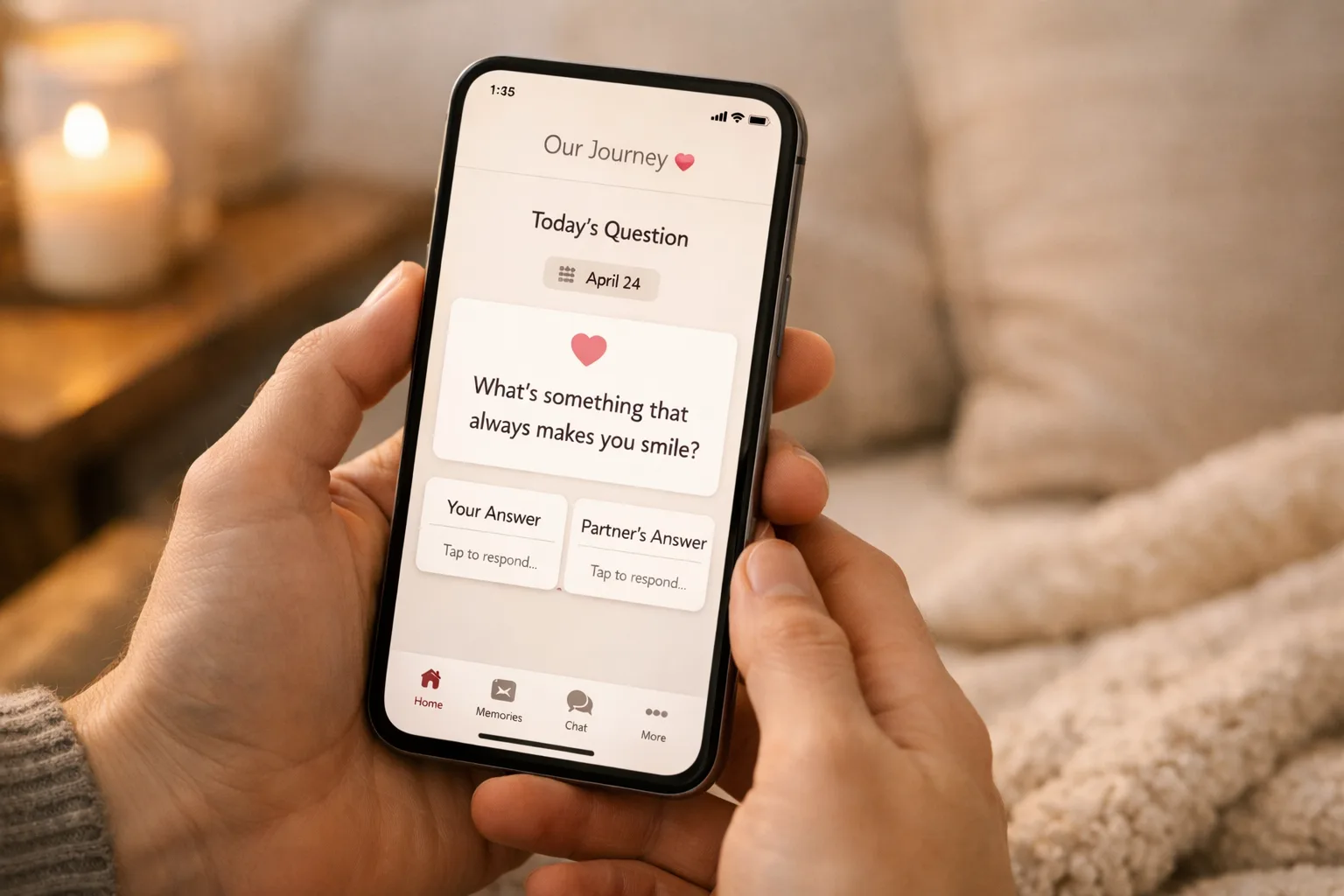
What it is: Apps specifically designed to facilitate daily connection, reflection, and communication between partners.
Best for: Couples who want consistent, low-friction support built into daily life.
Why it works: The biggest reason couples don't work on their relationship isn't lack of motivation — it's lack of structure. A well-designed app removes that barrier.
What to look for in a couples app:
- Guided questions (not just prompts that feel random)
- Reflection tools — not just games or quizzes
- Designed for depth, not engagement metrics
Listening Loft was built specifically for this: daily guided check-ins, structured reflection, and prompts that actually open conversations instead of closing them.
5. Relationship Coaching
What it is: Goal-oriented support from a trained coach — focused on specific outcomes rather than therapeutic processing.
Best for: Couples who aren't in crisis but want to level up specific skills: communication, conflict resolution, intimacy, life planning.
Therapy vs. coaching: Therapy often explores the why (past, patterns, trauma). Coaching focuses on the what now (tools, habits, next steps). Neither is better — they serve different needs.
Cost: Similar to therapy in many markets, but sessions are often less frequent.
6. Books + Workbooks as a Couple
What it is: Reading and working through exercises together from a relationship workbook.
Best for: Low-conflict couples who want to proactively invest in their relationship.
Why it's underrated: A good workbook forces structured conversation about topics couples often avoid — values alignment, conflict styles, intimacy needs — in a low-stakes format.
Recommended: Couple's Workbook by Dr. Kathleen Mates-Younman, or the Gottman Card Decks (available as a free app).
7. Peer Support and Couples Communities
What it is: Connecting with other couples who are actively working on their relationships — online forums, local groups, faith communities.
Best for: Couples who feel isolated in their struggles and benefit from normalizing the work relationships require.
Limitation: Not a substitute for structured intervention when real issues are present. Better as a complement than a standalone approach.
When Alternatives Aren't Enough: Signs You Need Actual Therapy
Alternatives work well for many relationship challenges. But some situations need professional support — not because you've failed, but because the problem genuinely requires it.
Seek couples therapy when:
- There has been infidelity or a significant breach of trust
- One or both partners is dealing with untreated mental health issues
- There is any form of emotional or physical abuse
- You've tried self-directed approaches consistently and aren't improving
- The relationship is at a genuine breaking point
In these cases, an alternative isn't a workaround — it's a delay. Professional support is the right call.
How to Help Relationship Problems: A Practical Starting Point
If you're not sure where to begin, here's a simple framework:
Low conflict, want to go deeper → Start with a guided app + one good book Specific issue (communication, intimacy, conflict) → Structured self-help program Need intensive work quickly → Couples workshop or retreat Partner reluctant about therapy → Low-friction app first, build momentum Already tried self-help, still stuck → Online or in-person couples therapy
The most important thing isn't picking the perfect approach — it's starting. Relationships don't improve by waiting. For evidence-backed principles that apply regardless of which path you choose, read our guide on relationship advice that actually works.
Sources & Further Reading
- Gottman, J. & Silver, N. — The Seven Principles for Making Marriage Work (1999)
- Johnson, S. — Hold Me Tight: Seven Conversations for a Lifetime of Love (2008)
- Halford, W.K. et al. — "Best Practice in Couple Relationship Education," Journal of Marital and Family Therapy (2008)
- American Psychological Association — "What Works in Couples Therapy"
- The Gottman Institute — gottman.com
Common Questions About Couples Therapy Alternatives
Are couples therapy alternatives as effective as real therapy?
For mild to moderate relationship challenges, structured self-help and guided apps can be highly effective. For more serious issues — trust violations, mental health, deep-seated patterns — professional therapy typically produces better outcomes.
How do I get my partner on board with trying an alternative?
Start with the lowest-friction option. A daily app check-in feels very different from "we need to go to therapy." Once both partners experience small wins, bigger investment becomes easier.
Can a couples app replace therapy?
No — and a good app won't claim to. Apps like Listening Loft are designed to support connection and communication in everyday life, not to process trauma or manage crisis. They work best as a consistent maintenance tool, or as a first step before seeking professional support.
How long before we see results?
With consistent daily practice: most couples notice a shift in 2–3 weeks. Deeper patterns take longer. The key variable is consistency, not intensity.
The Bottom Line
Couples therapy is one tool — not the only tool. The best approach to help relationship problems is the one you'll actually do, consistently, together.
Start where you are. Use what's available. And if self-directed approaches aren't moving the needle after genuine effort, therapy is there — and it works.
Ready to start today? Try Listening Loft free — daily guided check-ins designed to open the conversations that matter.
Ready to Grow Together?
Start your free couples check-in — no judgment, no pressure, just a warm space to understand each other better.